
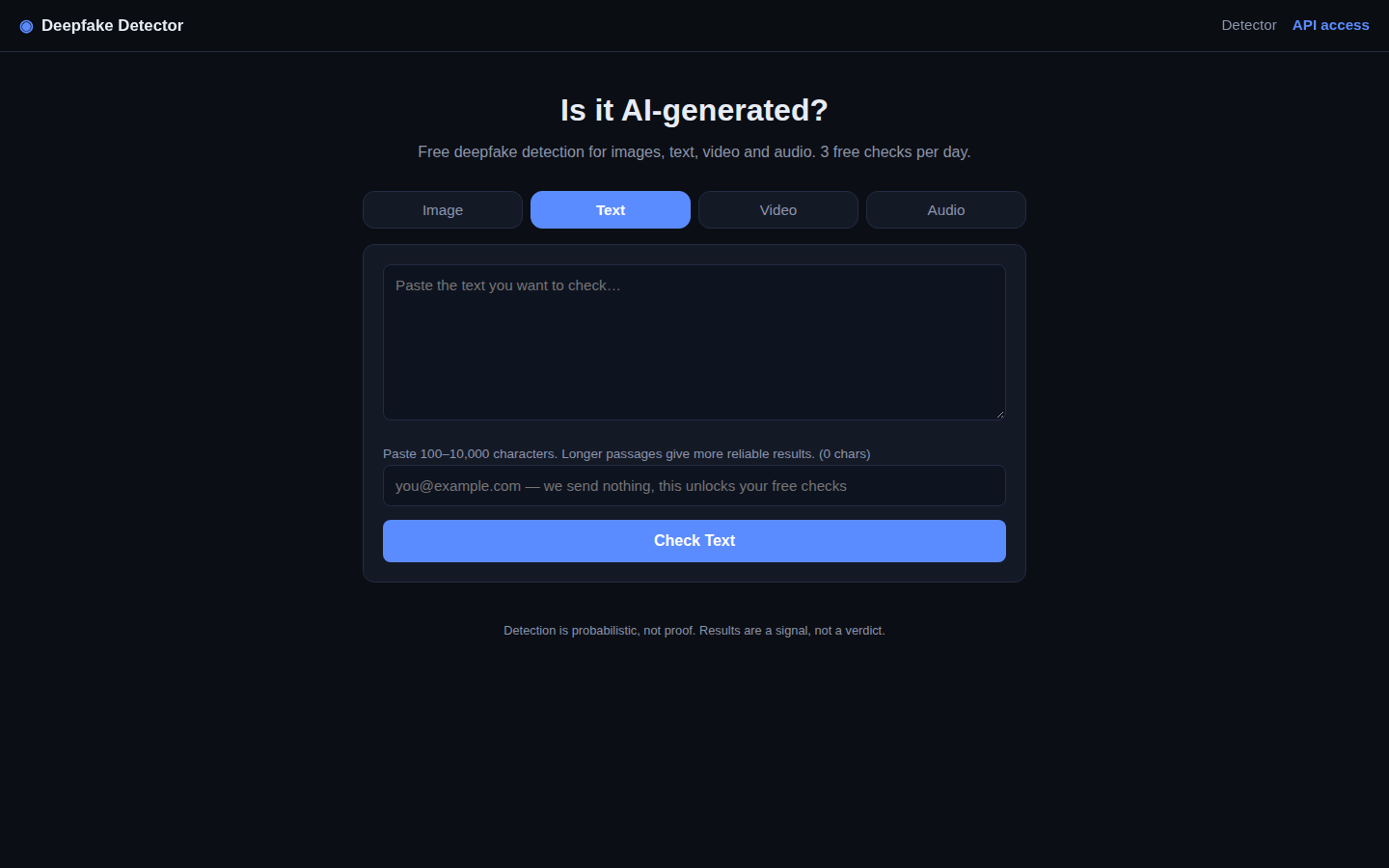
A check earns its keep when the answer changes what you do next. The Text tab tells you the working rule up front: paste 100 to 10,000 characters, and longer passages give more reliable results. Keep that standard, keep the disclaimer in view (a signal, not a verdict), and DeepfakeDetect slots into more workflows than its four tabs suggest. Six places it fits:
1. Before a wire transfer clears
The voice note authorizing a payment is now a standard fraud prop. Run the audio through the Audio tab before anyone acts on it, and make the check part of the procedure, not a suspicion. Our voice checks for call centers piece lists the other layers that belong around it.
2. In a KYC queue, as the cheap first screen
Onboarding selfie and document checks are where flagged media does real damage. A probabilistic screen in front of the paid stack catches the obvious fakes for nothing; the KYC buyer's guide covers how buyers layer the rest, and the comparison with a dedicated vendor like Sensity is in our Sensity vs Reality Defender piece.
3. On a dating profile that looks rendered
Profile photos are the lowest-stakes, highest-volume deepfake most people will ever meet. Save the photo, run the Image tab, and let a flag settle the argument. The dedicated dating profiles safety guide goes deeper on the tells.
4. In a newsroom, before a clip moves
Video is checked from sampled frames, which is exactly the right speed for a first pass on a viewer-submitted clip: fast enough to hold a story, honest enough to say what it is. The newsroom checklist is the full workflow this belongs to.
5. On text that reads a little too smooth
Applications, reviews, reference letters: paste the whole passage, not a sentence, because the checker says plainly that longer text reads more reliably. A flag is a prompt for a human conversation, nothing more. For the other half of AI text work, our sister tool PromptPolish at AIForWork sharpens the prompts you write yourself.
6. As a reality check on vendor claims
Before any procurement, run the same suspicious samples through the tool and through the demo a salesperson shows you. Our accuracy comparison explains why vendor numbers never line up; your own samples are the only benchmark that matters. Three checks a day is enough for all of this, and when it stops being enough, that is the API conversation: open DeepfakeDetect.